
In Conversation with: Maike Depas

Share
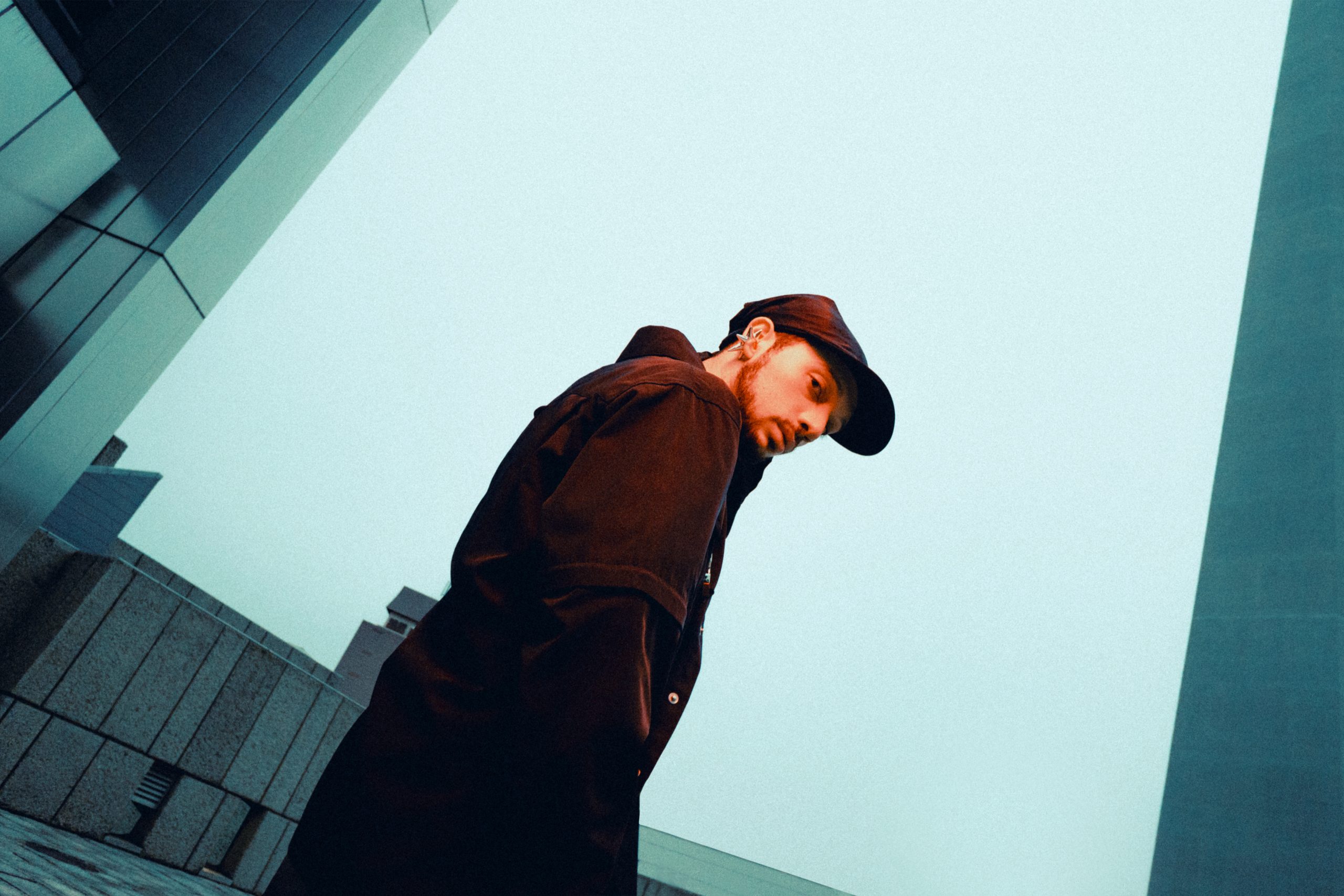
Maike Depas is not here to play safe. The Milan-born producer, aka Michelangelo De Pasquale, has spent over a decade sharpening his sound into something fierce, cinematic and completely his own. Trained at the Milan Conservatory in piano and composition, his roots run deep in classical music, but what he delivers today is raw, industrial hard techno infused with flashes of 90s rave, psy-trance, and pure emotional grit.
2024 was the year everything levelled up. After dropping heavyweight releases like ‘Tokyo Nights’ and ‘Circle of Life’ on Pushmaster Discs, Maike relaunched with a dystopian visual identity that turned heads across the scene. There was a striking Demobaza shoot, a powerful live set filmed at Berlin’s Teufelsberg, and a stacked 10-tracker called ‘Sexy Devil Horse’ on his own The Innovation Studio Records, featuring Luca Agnelli, OGUZ, CHRS and more.
Now, in 2025, he’s keeping his foot on the gas with a string of releases that show the full scope of his artistic vision. From the introspective weight of ‘Sound of Nothingness’ to the grit of ‘Don’t Phonk With Me’ and the emotional pull of ‘Back To You’, Maike lays out a three-part journey that digs deep into contrast, vulnerability and power.
We caught up with him to unpack the concept behind the trilogy, talk chaos vs structure in the studio, and find out why his label is quickly becoming a new home for the future of hard techno…
Let’s start with your trilogy of releases: ‘Sound of Nothingness’, ‘Don’t Phonk With Me’, and ‘Back To You’. How do these tracks connect in your mind? What’s the story you’re telling across them?
These three tracks are a journey through contrast; they reflect the duality that lives inside my sound and inside myself as an artist. ‘Sound of Nothingness’ represents a void, a space of introspection and raw emotion. It’s cinematic, haunting, and existential, almost like the moment before something powerful happens.
Then ‘Don’t Phonk With Me’ flips the switch. It’s gritty, playful, and unapologetic. It brings my rave influences and rebellious side to the front. It’s like the moment you fight back, when energy takes over reflection.
And finally, ‘Back To You’ is a return, but not to a person. It’s a return to feeling, to vulnerability, and ultimately to hope. It’s more emotional, melodic, and it opens a new chapter.
Together, they show who I am right now: someone who’s not afraid to dive into darkness, dance in chaos, and still come back with something meaningful.
In ‘Sound of Nothingness’, there’s this powerful quote: “I’m just creating space for what is still to come.” What does that space represent for you right now, musically or personally?
That space is a threshold. In ‘Sound of Nothingness’, I wanted to express the feeling of standing in front of something unknown, where silence isn’t absence, but tension. It’s that suspended moment when you’ve burned everything behind you, and something new is about to begin, but it hasn’t revealed itself yet.
Musically, it’s a refusal to fill every second with sound just for the sake of it. It’s about intention, letting breath, texture, and silence carry as much weight as a kick drum. Personally, it reflects where I am in my journey: I’ve left behind old versions of myself, old ways of creating and thinking. But I’m not in a rush to define what’s next.
That space is uncomfortable, but necessary. It’s where growth happens. It’s where I can reconnect with what’s real, not trends, not noise, just pure emotion. That’s the sound of nothingness.

How did the sound and vision of ‘Sound of Nothingness’ evolve from your previous EPs like ‘Sexy Devil Horse’? What’s changed in your process or mindset?
With ‘Sexy Devil Horse’, I was driven by pure instinct; it was raw, provocative, and intentionally chaotic. That double EP captured the animal energy of the rave, with zero filters. It was about destruction, seduction, and impulse.
‘Sound of Nothingness’, on the other hand, is the aftermath. It’s what comes when the dust settles. I wanted to give weight to silence, to textures, to emotional tension. I shifted from aggression to introspection, without losing intensity, just redirecting it inward.
The biggest change in mindset was letting go of the need to prove something. With ‘Sound of Nothingness’, I gave myself permission to be more vulnerable, more cinematic, and more concept-driven.
What can you share about your upcoming single ‘Back To You’? How does it fit into your artistic arc in 2025?
‘Back To You’ is the emotional core of my 2025 arc. It’s the moment where vulnerability becomes strength. While my previous releases like ‘Sound of Nothingness’ were introspective and abstract, ‘Back To You’ brings that emotional depth into a more open, melodic, even anthemic form.
Sonically, it’s still intense, but it’s more accessible. It’s my way of connecting with a wider audience without compromising who I am. It blends cinematic synth work, club energy, and a vocal hook that feels intimate yet powerful.
This track marks the point where Maike Depas opens the door to a broader landscape, where hard, emotional, and futuristic can live in the same universe.
You’ve spoken about contrast, discipline, chaos, structure versus release. How do you bring those opposites together when you sit down to write a track?
There’s discipline in my workflow: sound design, structure, and technical precision. That’s the architect in me. But once the foundation is there, I let chaos in. I improvise, distort, and break rules. That’s where emotion enters, the unpredictable part.
I believe tension is what makes music powerful. A moment can feel incredibly controlled, and then suddenly break open into pure catharsis. That push and pull is what keeps the listener (and me) alive inside the track.
You’re known for a dystopian visual world. Where does that come from, and how does it shape your music?
The dystopian aesthetic comes from how I see the world: hyperconnected, overstimulated, yet emotionally distant. That contrast shapes everything I do.
My music reflects that tension: synthetic sounds clashing with human emotion, structure meeting chaos. I’m drawn to broken systems, collapsing futures, and the beauty hidden in discomfort.
How did working with designers like Demobaza and performing in places like Teufelsberg shape your creative vision outside the studio?
Wearing Demobaza helped me embody the world behind my music. Performing at Teufelsberg showed me how sound changes when it interacts with space, history, and energy.
Since then, I see every track as more than audio; it’s an atmosphere.
As the founder of The Innovation Studio Records, how do you balance being a producer, a label owner, and a curator?
It’s not always easy, but for me, everything starts in the studio. That’s where the sound, vision, and direction of the label take shape.
Being a producer helps me lead with quality. Being a label owner gives me control over the narrative. And being a curator lets me build a space where other artists can evolve, too.
It’s all part of the same mission, pushing forward a sound that feels personal but speaks to a future beyond me.
What are you trying to achieve with the label in the long term? Is it a platform for your sound, or something broader for the scene?
The Innovation Studio Records started as a way to give shape to my own sound, a space where I had full creative control, free from outside expectations. But from the beginning, I knew it had the potential to become something more.
The long-term vision is to build a home for artists who share a similar mindset: driven by emotion, unafraid of experimentation, and always looking toward the future. Beyond just releasing music, the label is about building a community. A place where artists can collaborate, grow, and challenge the norms of what techno and club culture are supposed to sound and feel like. It’s about reshaping the scene from the inside out.
You’ve worked with artists like Luca Agnelli and OGUZ on past releases. What do you look for in collaborators, sonically or philosophically?
I look for artists who aren’t just chasing trends; they need to have a strong identity and something to say.
Sonically, I’m drawn to people who can balance raw power with emotional depth. I want collaborators who care about the journey of a track, not just the drop.
With artists like Luca Agnelli and OGUZ, there’s mutual respect and a shared hunger to push things forward, and that’s essential for me.
Your studio setup is next level. What were some non-negotiables when building it, and how has having that space changed your approach?
When building my studio in Milan, there were two non-negotiables: precision and inspiration.
Precision meant top-tier gear, a 32-channel analog mixing console, high-end monitoring systems, and a room designed for accurate sound.
Inspiration had to do with the atmosphere: I wanted a space that takes you out of yourself, where every session feels like an experience.
This space completely changed my approach: I control every parameter, freely experiment with analog and digital tools, and ensure every sound design has a clear purpose.
Over time, the studio has also become a resource for other artists: it offers professional mixing and mastering services. It’s a creative hub, for me, and for anyone looking to grow their sound.

You trained at the Milan Conservatory. How does that classical background influence your approach to sound design, especially in such a hard, industrial genre?
Studying at the Conservatory taught me how to think in layers, harmony, structure, and emotional progression.
Even in the hardest, most industrial tracks I make, that classical mindset is still there. It’s what helps me create tension, release, and storytelling through sound design.
I treat distortion the same way I’d treat orchestration: every element has a role, and chaos is always controlled.
Can you break down one of your recent tracks from a production point of view, maybe a technique or design choice that gave it that extra edge?
One track I can break down is ‘Think Of Me’, from my latest EP ‘Sound of Nothingness’. What gave it that extra edge was the sculpting of the low end.
I started fully in the digital domain for precision and flexibility, but then reprocessed everything through a new piece of outboard gear, the Mammuth Zobie by Rec Audio. That gave the bass a more physical, analog character without losing control.
That balance between digital control and analog depth really shaped the final sound.
What are your go-to tools or plugins when you want to inject emotion into a hard techno track?
When I want to inject emotion into a hard techno track, it’s all about tone shaping and movement. I use Acustica Audio’s Ruby, an emulation of the D.W. Fearn mastering EQ, to bring out musical harmonics and add warmth and presence, especially in the high-mids. It helps emotional elements cut through the mix without being aggressive.
For sound design, ShaperBox is essential. I use it to create evolving modulations, on pitch, volume, and filters, that make static sounds feel alive. That subtle motion adds tension, fragility, or even melancholy, depending on how it’s used.
For younger producers trying to find their own style, especially in more challenging genres, what advice would you give them about carving out a unique sound?
To find your own sound, you first need to explore. Don’t just focus on the genre you like right now; study different styles, experiment with forms that challenge you, even outside electronic music.
The goal isn’t to fit in, but to absorb, question, and transform. Sometimes the next great idea doesn’t come from a plugin or a loop, but from a painting, a film, or a piece of classical music you didn’t expect.
Live fully inside the artistic dimension, not just the club. That’s where originality is born.
You’ve mentioned that your music is “just creating space for what’s still to come.” So what’s coming next, sonically, visually, or conceptually?
What’s coming next is a shift, not just in sound, but in presence. I’m entering a new phase where everything becomes more defined, more intentional, more visceral.
The contrast in my music will go deeper. The emotional layer will be louder. And what used to be a suggestion will now become a statement.
I’m not just creating space anymore, I’m stepping into it.
What does the phrase ‘Hard Never Dies ‘mean to you, and how does it reflect the direction of your new compilation?
‘Hard Never Dies’ is both a tribute and a manifesto. It represents the core of what we believe in as a label: emotional intensity, futurism, and resistance to compromise.
This compilation is about artists who bring meaning and character to their hardness. Each track is a declaration of identity, pushing the boundaries of techno with feeling, tension, and vision.
It marks a turning point for The Innovation Studio Records, a collective moment where the underground speaks loud and proves that raw energy, when crafted with care, never fades.
Maike Depas ‘Sound Of Nothingness’ is out now, grab it here and ‘Back To You’ drops on 8th August, grab that here!
You Might also Like


Related Stories


Love our content and what we do?
Why not buy our team members a coffee and help support their incomes. Thank you for your continued support.

